(ANTIQUITIES). (WOMEN COLLECTORS). BUDGE, E. A. Wallace. Egyptian Antiquities in the Possession of Lady Meux at Theobald's Park, Waltham Cross.
(ANTIQUITIES). (WOMEN COLLECTORS). BUDGE, E. A. Wallace. Egyptian Antiquities in the Possession of Lady Meux at Theobald's Park, Waltham Cross.
Couldn't load pickup availability
A Beautifully Produced Catalogue Signed and Inscribed by the Collector
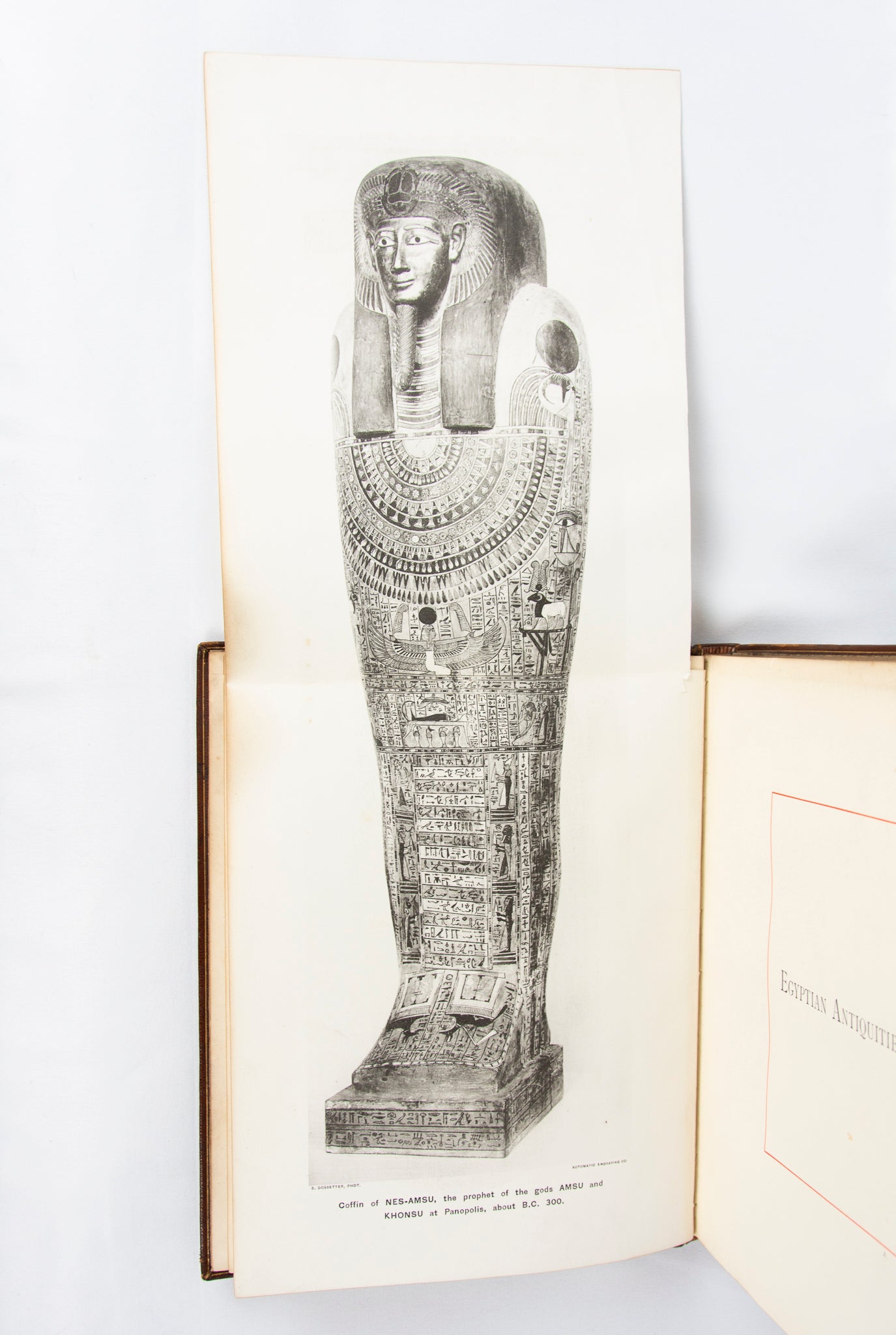
(ANTIQUITIES). (WOMEN COLLECTORS). BUDGE, E. A. Wallace. Egyptian Antiquities in the Possession of Lady Meux at Theobald's Park, Waltham Cross. (London: Harrison & Sons, 1893) x, 119, [1] pp. (270 x 215 mm.) No. 3 of 200 copies. Publisher's brown pebble-grain morocco stamped in gilt by Harrison & Sons, watered silk endleaves, all edges gilt. With folding frontispiece depicting a sarcophagus. Title with inscription to Professor John Blackie, signed by Lady Meux. Joints a little flaked, light rubbing to corners and boards with a few patches of loss to grain, several small dark spots to spine, silk pastedowns slightly wavy, but in very good condition overall; light foxing and rumpling to a couple of leaves, small tear at fold of frontispiece, very clean throughout.
A deluxe, privately printed publication describing the Egyptian artifacts collected by a wealthy and eccentric Victorian woman.
Valerie Susie, Lady Meux (1852-1910) married into the fabulously wealthy Meux family of brewers in 1878. A one-time actress and hostess, she was never truly accepted by high society. Although she is perhaps best remembered for a series of three portraits painted by James McNeil Whistler, in her day she was also known as a flamboyant personality who rode around in a zebra-drawn carriage, purchased the old Temple Bar gate to install on the Meux estate, and expanded the family home to include a Turkish bath and roller-skating rink.
Lady Meux's interest in antiquities was aroused during her honeymoon to Egypt and the Holy Land, and her collection grew to include more than 1,700 objects, which were kept at a specially built museum at her home. The present catalogue, written by keeper of oriental antiquities at the British museum, contains descriptions of some of the most important pieces, including papyrus, sculpture, funereal scarabs, amulets, boxes, and, the jewel of the collection, the mummy and coffin of Nes-Amsu (which purportedly carried a curse). Lady Meux left her collection to the British Museum, but depending on who you ask, the trustees either could not agree on the terms of the donation, or snubbed it altogether due to her low birth. Instead, it was sold at auction in 1911.
This copy is inscribed to John Stuart Blackie (1809-95), a Scottish-born professor of humanities and Greek, who would have gotten on rather well with Lady Meux; an enthusiastic and idiosyncratic fellow, he "enjoyed his persona as a flamboyant eccentric," and is reported to have "mounted a pyramid to sing 'Scots wha hae'" while visiting Egypt at the age of 70 (DNB). (1171)