A Visual Record of Iraq After the Fall of the Ottoman Empire
(PHOTOGRAPHY). (IRAQ). KERIM, A. (Photographer). Camera Studies in Iraq. (Baghdad: A. Kerim & Hasso Bros., n.d. [1925]) [50] leaves. (240 x 312 mm.) First Edition. Original faux-crocodile stitched with brown cord, upper cover with gilt lettering. With a total of 73 photogravures (35 of which are full-page), printed on speckled paper. With three laid-in notes in English, written by a former owner. A very clean, well-preserved copy with only minor issues: small tear near spine, corners and edges a bit rubbed, slight bump to upper corner of text block, light stain to outer margin of first leaf and minor spots elsewhere.
Stunning photogravures of Iraq's landscapes, people, architecture, and archaeological sites, capturing a diverse country in the midst of transformation.
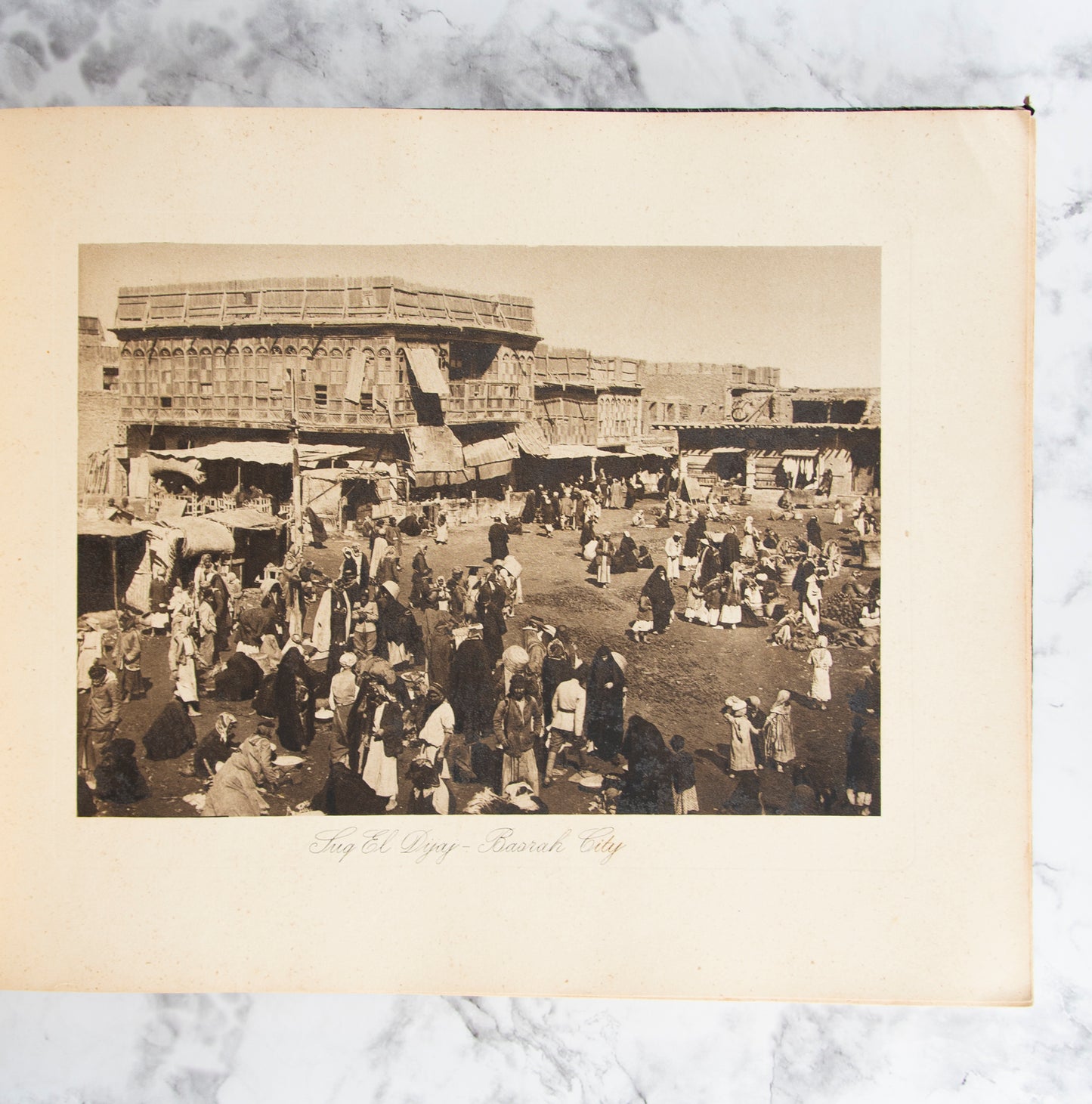
These beautifully printed photogravures reflect a vibrant and remarkably diverse population that included Arab Muslims, Assyrians, Kurds, Christians, Jews, and nomadic peoples such as the Bedouins. Many of the photos here depict people going about daily life, from washerwomen on the banks of the Tigris and vendors selling fruit in the market, to men performing religious ceremonies and Sheiks enjoying "the famous Arab coffee." The photos also celebrate the architectural and archaeological splendors of the region, including the ruins of Babylon and Nineveh, and important monuments such as mosques, shrines, and tombs. Some sites pictured here, such as the al-Nabi Shith mosque in Mosul, were later destroyed.
Most of the images are credited to Abdul Kerim (with a couple of exceptions being aerial images supplied by the Royal Air Force). Although we have been able to find little about the identity and career of this photographer, it seems likely that he ran a studio in Baghdad, where he would have catered to local residents as well as foreign travelers. The photos in this work would have undoubtedly appealed to western tourists, but they also reveal Kerim's firsthand familiarity with Iraqi landscapes and communities, resulting in images that are deeply intimate, respectful, and authentic.
At a time when most books about the region were the work of westerners publishing on travel, ethnography, and archaeology, the present work stands out as both a beautiful artistic production by a resident photographer, and an important visual record documenting a major period of transition from the fall of the Ottoman Empire to the early years of the modern Iraqi state. (1035)